Architects of Nature: Inspiring Structures
Architects of Nature: Inspiring Structures
The natural environment in which we sustain our lives offers a living space not only for humans but also for many living beings such as animals and plants. While humans become architects through the education they receive and the thought systems they develop, some creatures in nature carry this knowledge instinctively. These creatures, which constitute nature, produce spaces through function, climate, material, and balance without drawing any plans, using measuring instruments, or seeking forms.
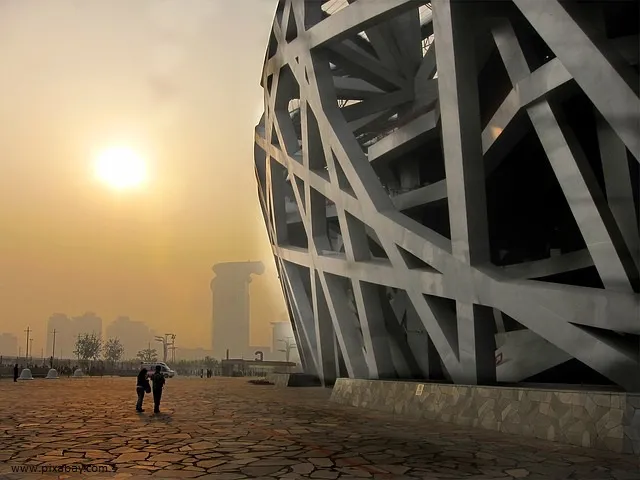
For this reason, nature is not only a source of inspiration for architecture but also a readable field of knowledge. Of course, it is not possible to address all these structures in nature within a single article. However, some examples offer a strong starting point to understand how this relationship established with architecture develops.
Weaver Birds: Spaces Built by Weaving
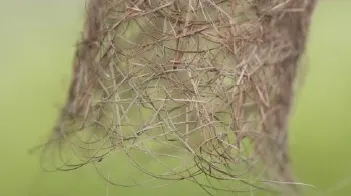
Weaver birds living in Africa, India, and surrounding islands take their name from the nests they create by weaving. The male weaver bird builds his nest by bringing together fresh grass pieces with a complex knitting system. After this structure is completed, it is left to dry and presented to the female bird’s appreciation.
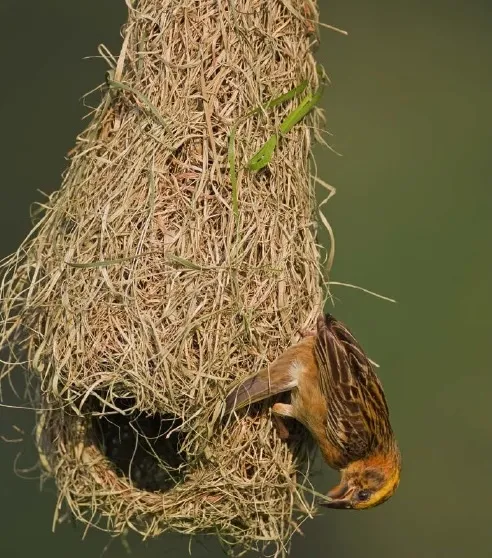
The female bird decides whether the nest will continue its existence. If not appreciated, the nest is abandoned, and the male bird starts the construction process again. This situation shows that the structure is evaluated not only by its sheltering function but also by its form, durability, and aesthetics. Weaver birds’ nests are one of the most refined spatial examples established by nature in terms of material knowledge and construction process.
Termites: Structures Working with Climate
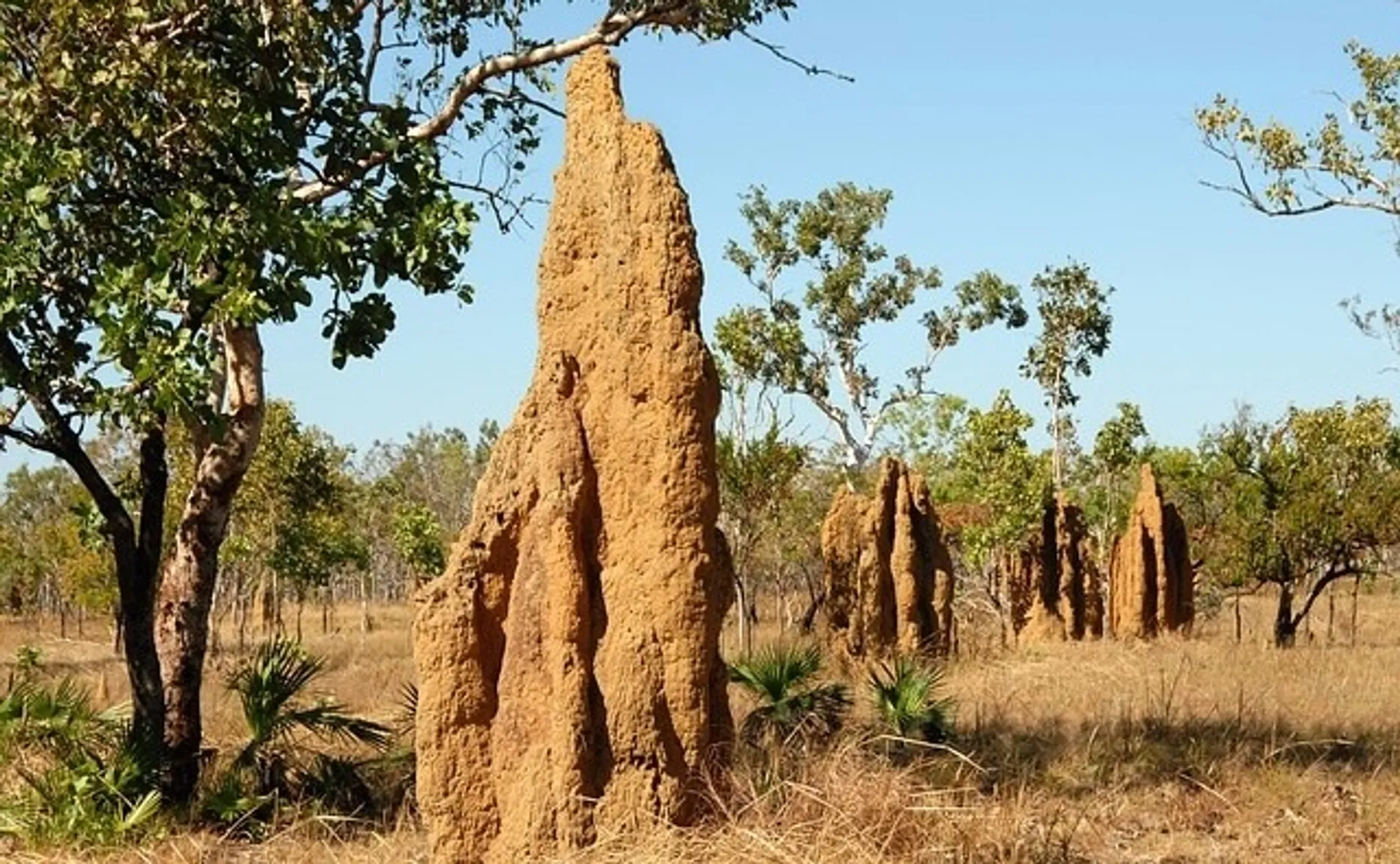
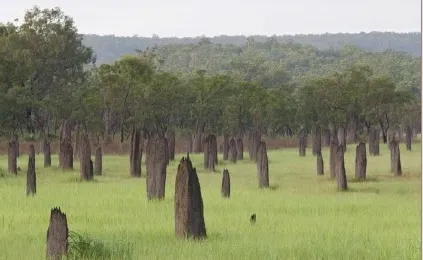
Termites are a type of insect usually living in tropical climate regions and often confused with ants. However, termites offer quite remarkable examples in terms of architecture with their social organizations and the structures they build. Termite mounds, which can reach heights of seven meters, are formed by the combination of soil and enzymes they secrete.
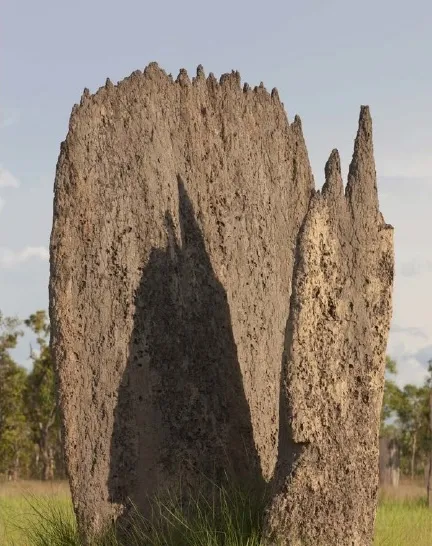
The most surprising aspect of these structures is the relationship they establish with the climate. Orientation that receives sunlight in a controlled manner, openings that provide ventilation in the interior, and channels extending under the ground to maintain moisture balance make termite mounds a self-regulating system. While the interior temperature is balanced thanks to the outer wall thickness, these structures where thousands of termites live together offer a natural air conditioning example.
Honey Bees: The Space of Measure and Geometry
Honey bees build honeycombs consisting of hexagonal cells with the beeswax they produce inside their hives. These cells are used to store honey, pollen, and larvae. Although produced by different bees, the consistency of cell dimensions and the almost invisibility of junction points make these structures geometrically impressive.
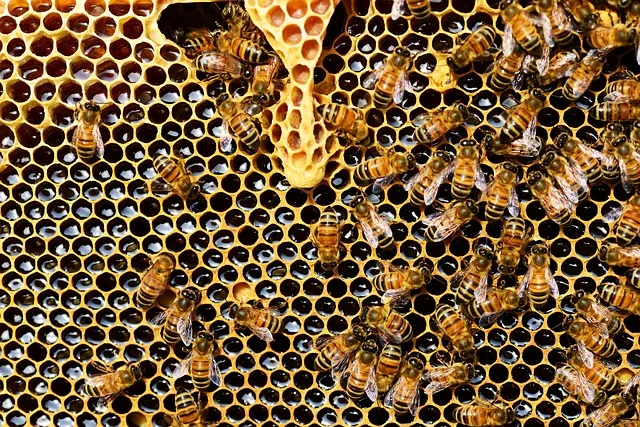
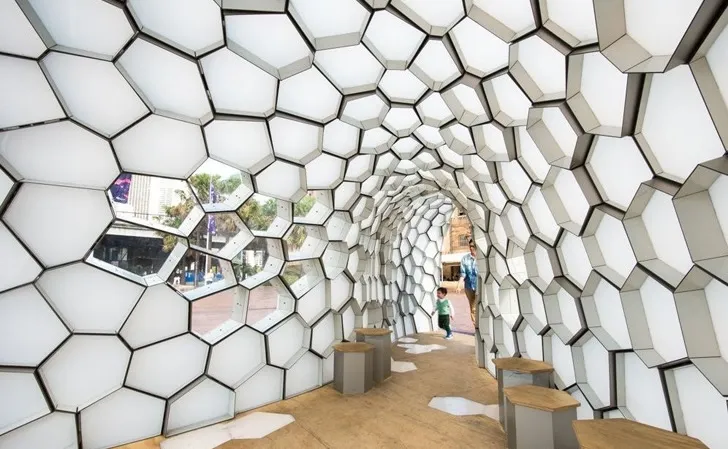
The hexagonal form is one of the most efficient geometries providing maximum storage space with minimum material. Bees determine these dimensions through sensor cells and antennae found on their bodies. This resulting regular system invites us to rethink the concepts of measure, module, and repetition in architecture.
Chambered Nautilus: Proportion and Continuity
The chambered nautilus develops its shell made of calcium carbonate by growing it throughout its life. As the creature grows, it adds a new and larger volume to its shell; these additions occur with a curved system. Moving to the new area by filling its old volume with gas, the nautilus manages to provide balance in water.
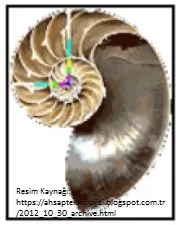
This sequential growth is associated with the “golden ratio” frequently encountered in mathematics and art. The form of the shell handles the concepts of proportion and continuity together. This structure is one of the strong examples showing that form in nature emerges not randomly but with a systematic order.
Silkworm: Process and Transformation
The silkworm spends a significant part of its life weaving its cocoon. The caterpillar, feeding on mulberry leaves, begins to produce the silk cocoon that will wrap it when it matures. This process is completed with uninterrupted labor for several days.
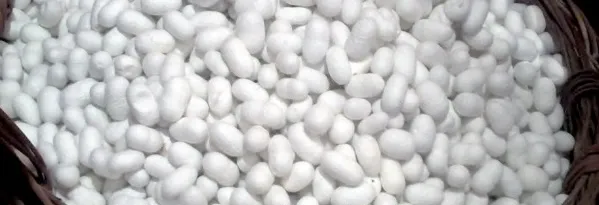
The resulting cocoon is not just a shelter; it is the space of transformation. While the caterpillar turns into a butterfly here, silk, a thread with high durability, remains. Silk has become a valuable material used in many fields from textiles to spatial decorations for centuries.
Reading the Balance in Nature
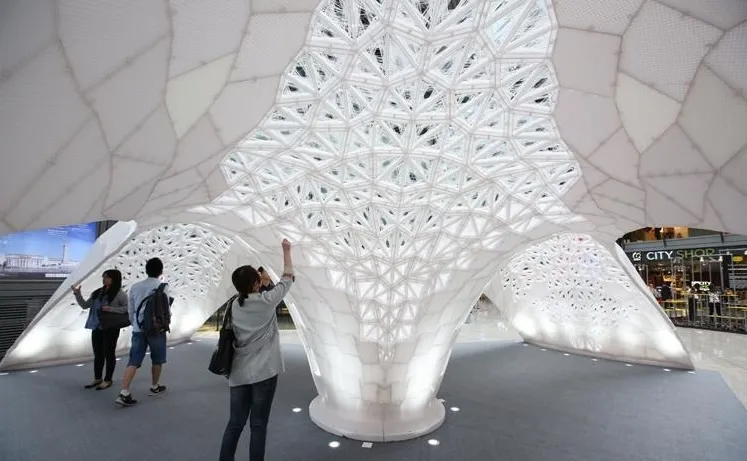
These examples in nature remind us that architecture is not a discipline produced solely by human hands. Nature creates spaces by thinking about measure, material, climate, and balance together. These structures offer systems that need to be read, not forms to be imitated.
Spatial readings handle nature as a teacher at precisely this point. Understanding the relationship between human-made spaces and structures established by nature opens up new areas of thought for the future of architecture.
📌 Watch the video version of this article on our YouTube channel
🔹 Editorial Note • This article is part of the Spatial Readings series in Pinatolia, which aims to read architecture through nature, space, and construction knowledge.
🔹 References • Animal Architecture by Abrams. New York. (2013). (English translation of ‘Architektier’ by Knesbeck. Munich)
• Animal Architecture by Abrams. New York. (2013). (English translation of ‘Architektier’ by Knesbeck. Munich)
• Leland M. Roth. (2006). Mimarlığın Öyküsü
• http://www.kozabirlik.com.tr/component/k2/item/137-tirtildan-kelebege.html
🔹 Copyright Note
• The content of this article belongs to the author. It cannot be reproduced or used for commercial purposes without the author’s prior written permission.