An Architectural Reading Route Through the Traditional Housing Concept in Taraklı
An Architectural Reading Route Through the Traditional Housing Concept in Taraklı
Discovering and experiencing Taraklı and its architectural details through topography, streets, traditional Taraklı houses, and daily life.
This article aims not just to view Taraklı as a district to visit, but to treat it as an architectural route that can be read through its street texture, traditional residences, and daily life practices. In Taraklı, architecture gains meaning not through singular structures, but through the entirety of relationships established at the scale of streets, squares, residences, interiors, and humans.
Location and Historical Background of Taraklı
Taraklı is a small district located in the southeast of Sakarya province, approximately 70 km from Adapazarı. Data based on cisterns found on Hisar Hill indicate that the history of the settlement dates back to 1000–2000 BC. Located within the Bithynia region during the Hellenistic period, Taraklı was known as “Yenice Tarakçı” before the Ottomans; it took its current name after joining Ottoman lands in the 13th century.
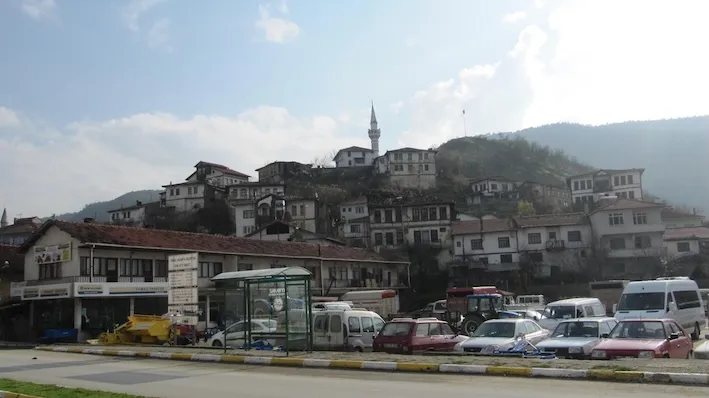
Throughout its history, its proximity to important trade routes and the old Istanbul–Ankara route has been decisive in Taraklı’s development. The change in main transportation axes over time caused the district to lose this vibrancy; however, this situation also brought about the relative preservation of Taraklı’s original texture.
Settlement Relationship Established with Topography
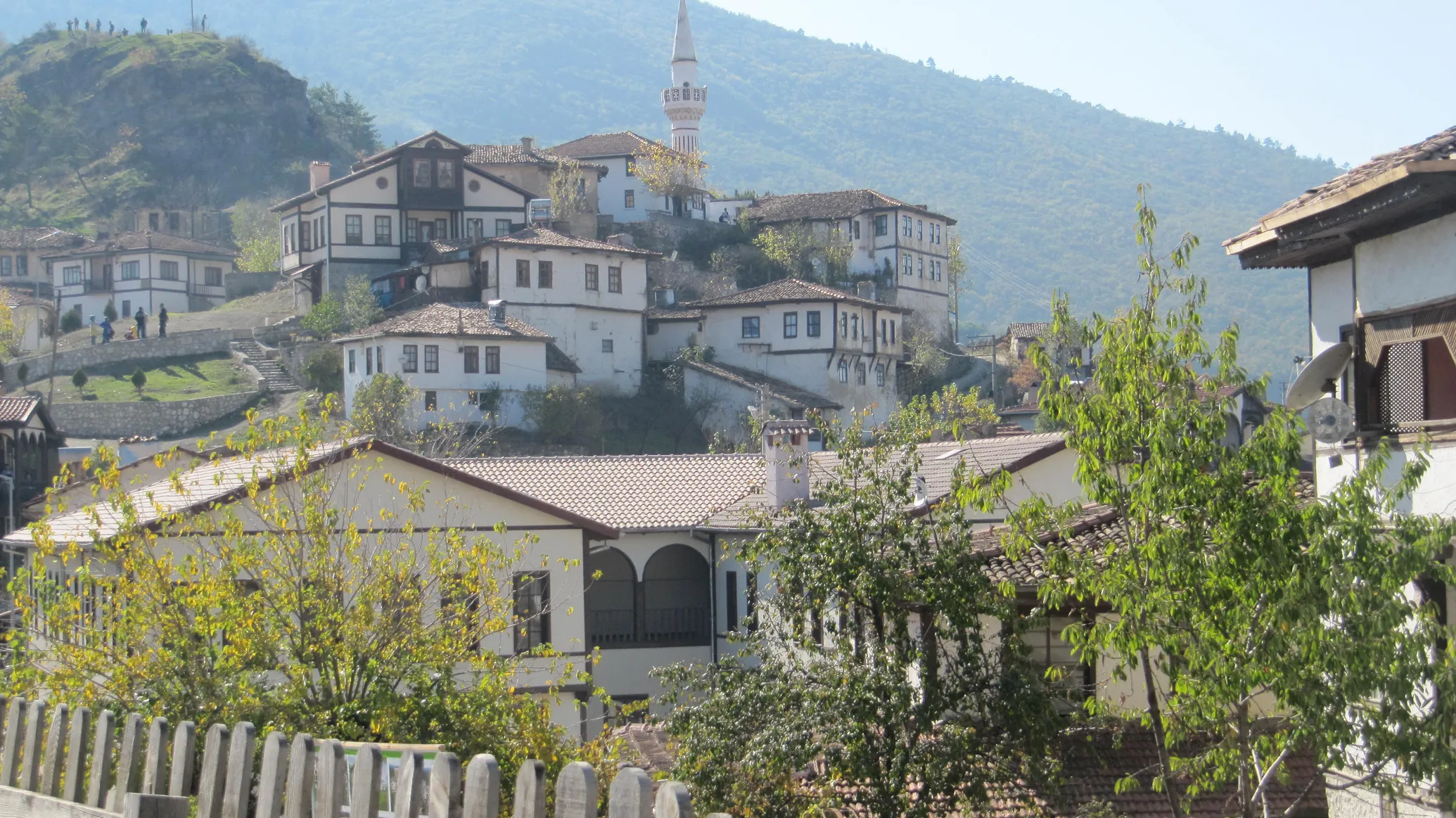
The most important element determining Taraklı’s architectural identity is the harmonious settlement approach established with the topography. Structures are tiered by adapting to the terrain rather than positioning against the slope. In this way, residences do not block each other’s views; light and air circulation are provided naturally.
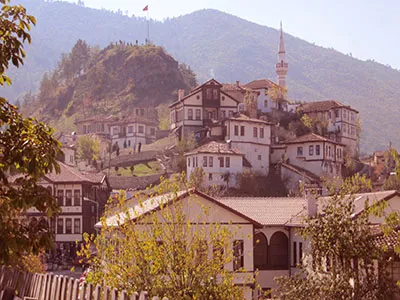
In sloping terrains, ground floors are often embedded in the terrain and used for service spaces, while living areas are moved to upper floors. This situation has both increased climatic comfort and strengthened the public-private space hierarchy within the residence.
It is observed that the historical texture of Taraklı is concentrated especially in 3 main neighborhoods (Hacımurat, Ulucami, Yusufbey).
Street Texture and Projections (Cumba)
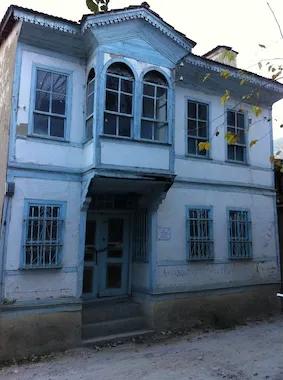
Taraklı streets develop along curved lines following the topography. One of the most important architectural elements determining the street silhouette is the projections located on the upper floors. Projections create a layered and dynamic spatial experience instead of a uniform perception by adding rhythm and movement to the street.
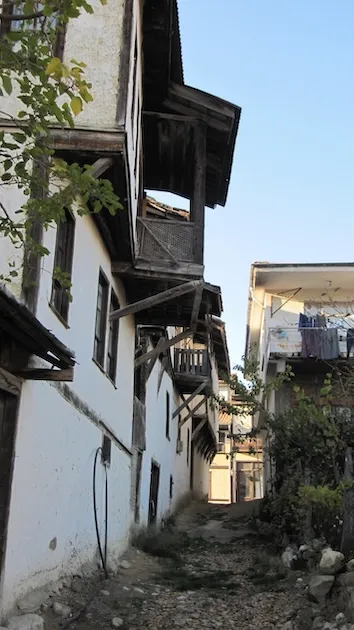
These projections establish a controlled relationship between the street and the residence. While the lower floors being more closed ensures privacy, the projections on the upper floors create visual contact and social awareness. Thus, individual residences become part of a common silhouette at the street scale.
Traditional Taraklı Houses: Plan, Layer, and Life
The most important element distinguishing Taraklı from other districts is the consistency of the plan scheme in the traditional housing texture. These structures, mostly consisting of two or three floors, generally have areas such as projections, gardens, and courtyards. In the construction system, stone on the lower floors and a timber frame system with adobe filling on the upper floors were commonly used.
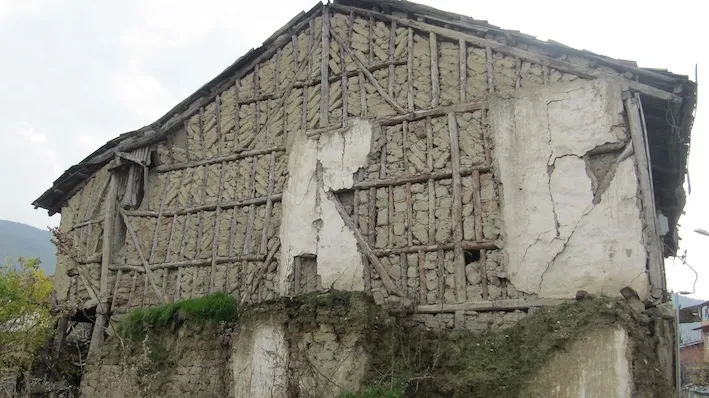
Spatial Hierarchy According to Floors
Entrance floors mostly function as storage, service spaces, and in some examples, stables.
The first floor is the main floor where living areas are located. There is a sofa (hall) in the center of this floor, and rooms open to this common space. Wet areas are generally resolved in relation to the sofa.
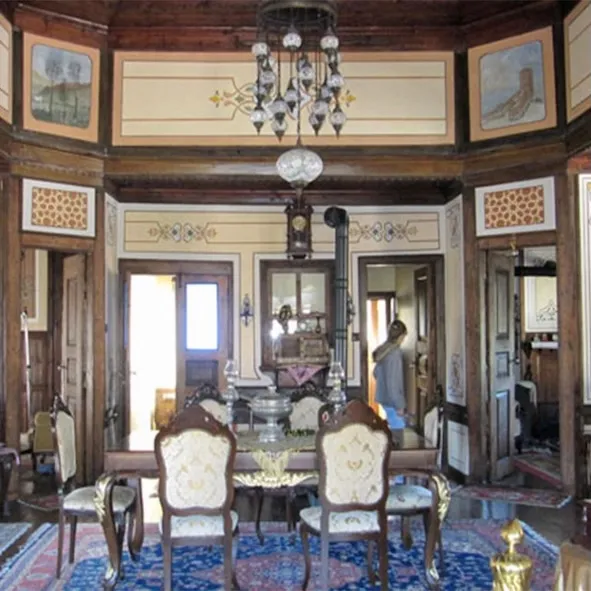
If there are upper floors, more private usage areas are located on these floors.
This arrangement creates a gradual spatial transition from public to private in Taraklı houses.
Traditional Residences and Interior Setup
In Taraklı residences, the interior setup is shaped by fixed furniture elements rather than movable furniture.
Shelf units (sergen) and hearths seen in kitchens on entrance floors; and a closet (yüklük), hearth, and bathing cubicle (gusülhane) trio and cedar seating (sedir) are located on the first floor.
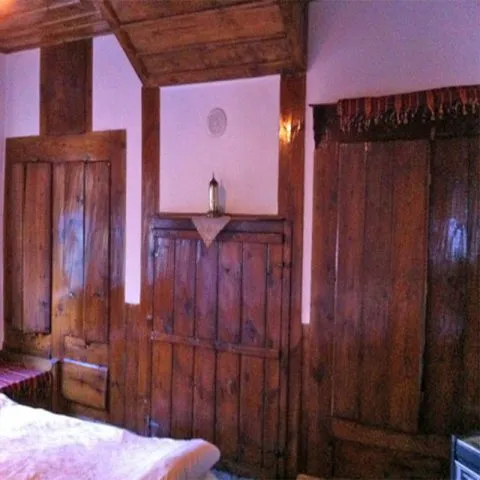
These fixed elements are not only functional solutions; they are architectural clues showing how daily life settles into the space. In Taraklı, architecture is read as a life practice thought out together with the user’s movements.
Public Focal Points
Along the architectural route, Hisar Hill is an important reference point for reading the settlement on an upper scale. Kurşunlu Mosque and its surroundings form the public center of Taraklı; the bathhouse, bazaar, and squares support the continuity of social life.
In Summary
Taraklı is a settlement that allows for a simple and consistent reading of how daily life settles into space, rather than ostentatious architectural examples. This continuity extending from street to house, from facade to interior, makes Taraklı an area of architectural experience to be understood by living, rather than just a place to visit. This route is an invitation to understand Taraklı rather than just seeing it.
Stops on the Route
The following stops stand out along this architectural reading route:
- Hisar Hill
- Historical Taraklı Bathhouse
- Fenerli House
- Abdi İbrahim House
- Hacı Rıfatlar House
- Hanımeli House
- Yunus Paşa and Orhangazi Bazaars
- Hacı Atıf Inn
- Kadirler House
- Çakırlar House
- Yunus Paşa (Kurşunlu) Mosque
- Historical Plane Tree (Bonus stop)
Map (Pinatolia - Taraklı Architectural Discovery Route)
🔹 You can examine the locations of the stops on this route and the walking route on the map. You can also view information notes about the structures by clicking on the burgundy Pin icons.
🔹 Editorial Note
• This article has been prepared within the scope of the Architectural Routes category at Pinatolia, with a spatial reading approach at the settlement scale. It aims to provide a conceptual ground for online architectural reading workshops.
🔹 Copyright Note
• The content of this article and map belongs to the author. It cannot be reproduced or used for commercial purposes without the author’s prior written permission.