Traditional Bird Houses: The Architectural Reflection of Respect for Life
Traditional Bird Houses: The Architectural Reflection of Respect for Life
Traditional bird houses (aviaries) are one of the quiet and powerful detailed solutions that remind us that architecture is not just a human-centered practice. These small structures show how the relationships people establish with the living things around them are reflected in spaces. Evaluating the ethical dimension of architecture and the concept of respect for life through bird houses creates a meaningful framework for structures to be produced in the future. Today, structures that can only provide living space for us or our domestic friends, in their time, respected other living things and provided living space. Moreover, they did this favor without expecting anything from the living thing in front of them. One of the most beautiful examples of this subject is traditional bird houses.
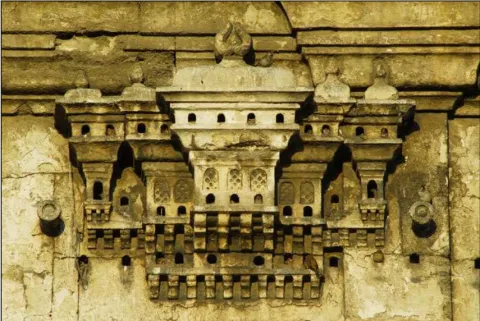
These are additions made to building facades for birds to shelter or detailed solutions carried out on the facade of the building for this purpose. The aim here is not to benefit from birds, but to provide them with a space to shelter. It is to protect them from conditions such as cold, heat, and creatures that can harm them.
History of bird houses
It is mentioned that structures were built for birds in different civilizations and at different dates, but these structures were used more for catching them, benefiting from their fertilizer or feathers. It is known that Turks valued birds before accepting Islam and included bird figures in their beliefs and rituals. After the acceptance of the Islamic faith, birds were valued in the Anatolian Seljuk and Ottoman periods. The accumulation of knowledge from previous periods and the subsequently accepted belief system may have influenced this perspective.
In the Ottoman period, pigeon fertilizers were collected and used in agriculture thanks to structures called dovecotes or “boranhane” in many places, but bird houses differ from other structures in this period only in terms of providing shelter for birds and adding architectural value to the building they are in. The bird house examples we see today are rare examples mostly left from this period. Changing living conditions, people’s perspectives and building materials, and differentiation in building style have torn bird houses away from new structures over time.
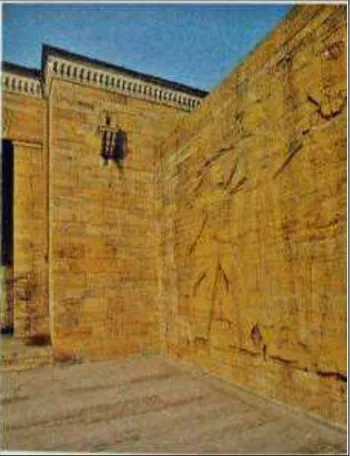
Construction techniques of bird houses
Bird houses could be seen on all kinds of building facades where people lived. In order to protect the living creatures inside, it was preferred to be positioned mostly on the south facades. Thus, it was ensured that the birds received enough sun and were protected from the cold. Bird houses were placed on the high parts of the facades and under the eaves to protect them from the possible destruction of other creatures. It is possible to come across these tiny houses in door arches, minarets, bay windows, and chimneys. Bird houses were evaluated in two main categories: one that does not protrude from the structure or protrudes slightly, and the other that protrudes significantly. The first group has simpler examples, but the second group, which protrudes significantly, has more magnificent examples. It is almost like a miniature house on its own. Stone, brick, and wood, which are the materials of the building on which it is located, were generally used as construction materials. We also come across some examples where limestone and marble are used. Techniques such as carving, framing, openwork, cladding, and plastering were also seen.
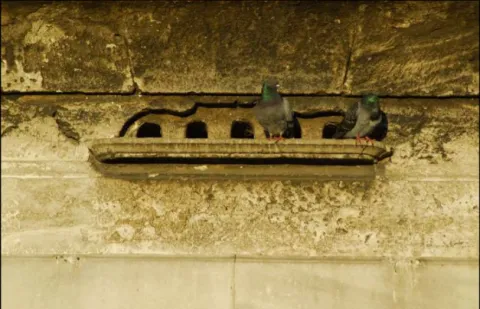
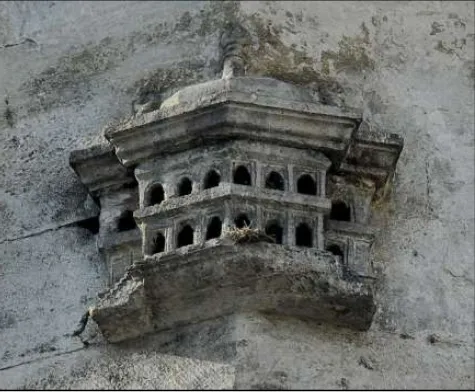
Benefits and values of bird houses
• Providing living space for birds and contributing to the natural ecosystem
• Being a document regarding the existence of a culture where it is possible to give without taking
• Contributing to the formation of the architectural identity of structures
• Being a symbol of a superior aesthetic understanding with its construction technique, material, and details
• Ensuring that birds continue their lives in their own areas without damaging the materials of the structures
• Being a solution to protect the facades of structures from bird waste
“When the sound of birds decreases in a place, life loses its value there” (Sözen, 2009)
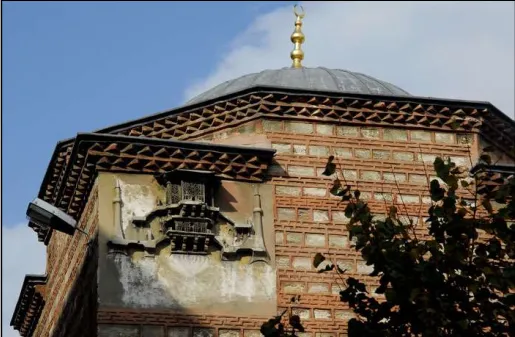
Spaces surrounded by high garden walls, whose openings are closed with iron bars, and where surrounding architectural structures and street elements are destroyed, show not only a physical transformation but also the change in the relationship established by humans with their environment. In these environments where bird sounds are not heard and natural elements are gradually decreasing, it becomes inevitable to rethink the cultural and human values carried by the space.
With the hope that these small but meaningful details from the past will inspire a more sensitive and qualified perspective for spaces to be produced in the future.
📌 Watch the video version of this article on our YouTube channel
🔹 Editorial Note
• This article is part of the editorial readings on architecture and space at Pinatolia.
🔹 References
• Özçakı, M. (2020). Traditional bird houses and a proposal for new applications. Faculty of Fine Arts Journal of Art, 13(15).
• Sözen, M. (2009). The Aesthetics of Compassion: Birdhouses. (Ed. Mehmet Aycı). Istanbul: Zeytinburnu Municipality Cultural Publications, pp. 195–202
🔹 Image Sources
• Yılmaz, D. Bird houses. Ankara Metropolitan Municipality Department of Environmental Protection and Control.
• Bird image (main image): Pixabay – www.pixabay.com/birds
🔹 Copyright Note
• The content of this article belongs to the author. It cannot be reproduced or used for commercial purposes without the author’s prior written permission.